
Most people assume working legally in the United States requires either a university degree, a specialist skill set, or a family connection already living there. The H2B visa exists to prove that assumption wrong.
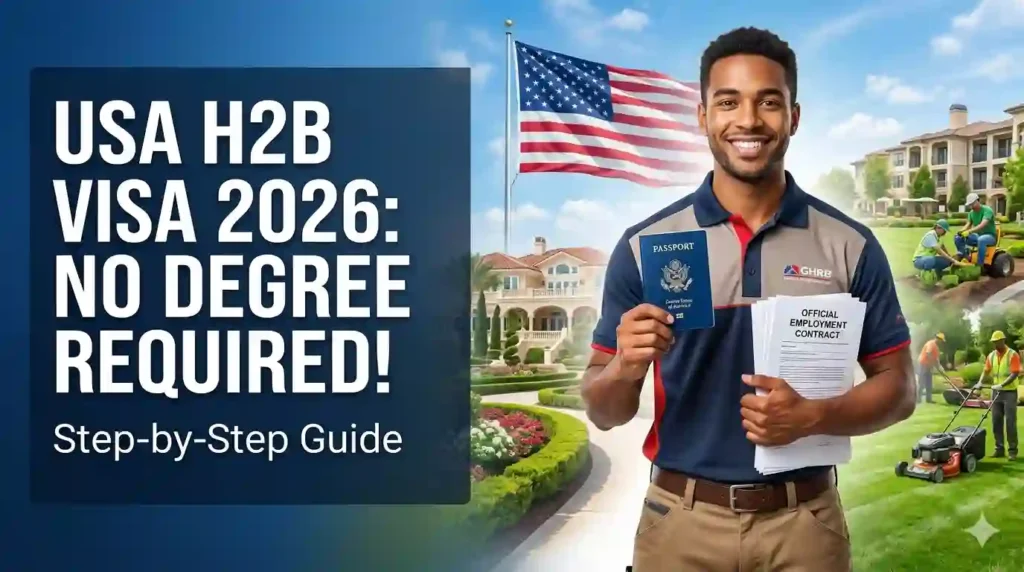
The H2B is a temporary work visa designed specifically for non-agricultural seasonal jobs — hospitality, construction, landscaping, resorts, theme parks, and dozens of other industries that run on a seasonal workforce. It does not require a degree. It does not require prior US experience. What it requires is a genuine job offer from a US employer who has gone through the process of sponsoring foreign workers for that specific role.
Every year, thousands of workers from the UK, Canada, Europe, and further afield use the H2B visa to spend a season working in the United States — legally, with a proper salary, and with a clear process from application to arrival.
How to Get H2B Visa USA Without a Degree in 2026
This guide covers exactly how that process works in 2026, what has changed this year, and what you need to do at each stage to give yourself the best realistic chance of getting there.
Table of Contents
What Is the H2B Visa and Who Is It For
The H2B visa is a non-immigrant work visa issued by the US government under the Immigration and Nationality Act. It allows US employers to hire foreign workers for temporary, seasonal, peak load, or intermittent non-agricultural work when they can demonstrate that there are not enough available US workers to fill those positions.
The key word is temporary. H2B visas are tied to a specific employer and a specific season — typically running from a few months up to one year, with the possibility of extension up to three years in total. After that, you must spend at least three months outside the United States before being eligible for another H2B visa.
Who it is designed for: workers in industries like hotels and resorts, ski lodges, theme parks, golf courses, landscaping companies, construction firms, seafood processing plants, and event venues — roles that are high volume during peak seasons and do not require a university qualification to perform.
Who applies successfully: workers from the UK, Ireland, Canada, Australia, South Africa, Mexico, the Philippines, Jamaica, and dozens of other countries whose nationals are currently eligible for H2B designation. Eligibility changes annually — the US Department of Homeland Security publishes the list of eligible countries each year.
Who it is not designed for: agricultural workers (that is the H2A visa), professionals in specialist fields (H1B), or people looking for a permanent route to US residency. The H2B is a seasonal programme, and the US government takes seriously the expectation that you return home when it ends.
The official USCIS page on the H2B programme has the full statutory detail: https://www.uscis.gov/working-in-the-united-states/temporary-workers/h-2b-temporary-non-agricultural-workers
H2B Visa Requirements in 2026 — What You Actually Need
The H2B does not require a degree, but it does have clear requirements. Understanding them before you start searching for employers saves you from applying for roles you cannot actually take.
You must be a national of a country designated as eligible for the H2B programme in the current fiscal year. The list is published annually by DHS and currently includes most of Europe, the UK, Canada, and a large number of countries across Asia, Africa, and Latin America. Check the current list before anything else.
You must have a genuine job offer from a US employer who holds an approved H2B petition. The employer does the heavy lifting here — they apply for the petition, they pay the USCIS filing fees, and they are responsible for demonstrating to the Department of Labor that the position is genuinely temporary and that domestic workers are not available to fill it.
You must intend to return to your home country when the visa period ends. The US consular officer at your visa interview will assess whether you have strong enough ties to your home country — a job, a family, property, or other commitments — to make that return credible. This is one of the most common reasons H2B visa applications fail at the interview stage, and it is worth thinking through before you get there.
You do not need a university degree. You do not need previous US work experience. You do not need to speak English at an advanced level, though basic communication is practically necessary for most H2B roles. What you need is a valid passport, a clean background, and a legitimate employer willing to sponsor you.
Step by Step — How to Get an H2B Visa in 2026
Step 1 — Find a US Employer Who Is Sponsoring H2B Workers
This is the starting point for everything. You cannot apply for an H2B visa on your own — the process begins with the employer, not with you.
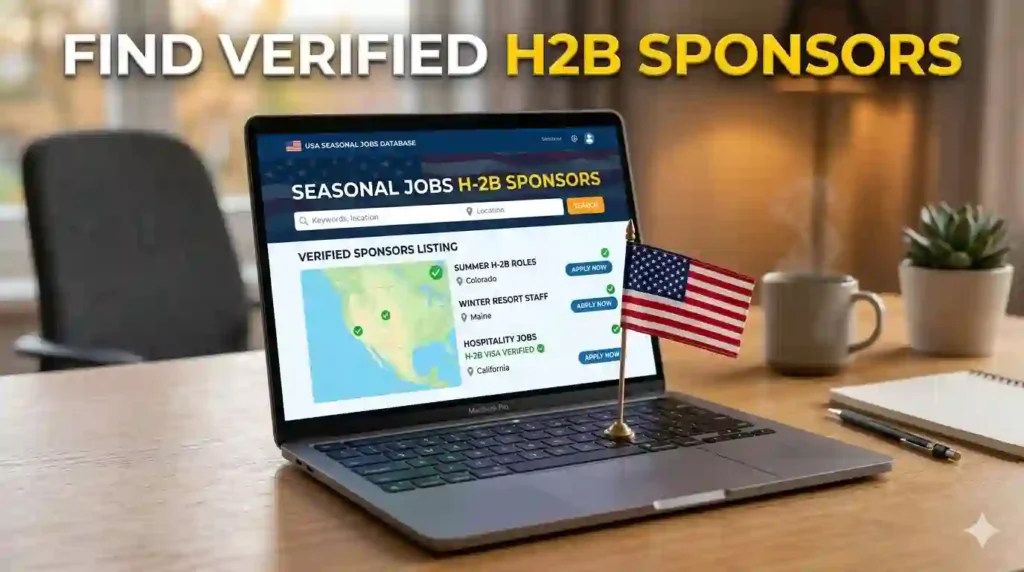
The most reliable way to find H2B sponsoring employers is through the US Department of Labor’s iCERT portal, which lists approved H2B job orders that employers have submitted as part of the application process. These are real, verified positions at employers who have already started the process.
Beyond iCERT, dedicated H2B job boards like H2BVisa.com and CoolWorks.com list seasonal positions specifically for international applicants. Major seasonal employers — Disney, Universal Studios, national park lodges, ski resorts like Vail and Aspen, and large hotel chains — run their own international recruitment programmes and post directly on their careers pages.
iCERT portal for verified H2B job orders: https://icert.doleta.gov/
Step 2 — Your Employer Applies for a Temporary Labor Certification
Before your employer can petition USCIS for your H2B visa, they must first obtain a Temporary Labor Certification from the US Department of Labor. This certificate proves that the employer conducted a genuine recruitment effort to hire US workers first, that the position is genuinely temporary, and that hiring a foreign worker will not negatively affect the wages or conditions of American workers in similar roles.
This step is entirely the employer’s responsibility. As the applicant, you do not file anything at this stage. What you can do is stay in communication with your employer and make sure they are meeting their deadlines — the H2B cap fills quickly, and timing matters.
Step 3 — Your Employer Files Form I-129 With USCIS
Once the Department of Labor approves the Temporary Labor Certification, your employer files Form I-129 (Petition for Nonimmigrant Worker) with USCIS. This petition requests permission to hire you specifically for the role described in the labor certification.
USCIS processes I-129 petitions within a few months under standard processing, or within 15 business days under premium processing for an additional fee of $2,805. For roles with a specific start date — a ski season that opens in November, a summer resort that needs staff from May — premium processing is often worth the cost to avoid missing the season.
Step 4 — Complete Form DS-160 and Pay the Visa Fee
Once USCIS approves the I-129 petition, you receive a receipt notice. At this point, you can begin your own part of the application. You complete the DS-160 online nonimmigrant visa application form on the US Department of State’s website, pay the MRV visa application fee (currently $185), and schedule your consular interview at the nearest US embassy or consulate.
DS-160 application: https://ceac.state.gov/genniv/
Step 5 — Attend Your Visa Interview
The consular interview is where many H2B applications succeed or fail. The officer’s primary concern is whether you are a genuine temporary worker who intends to return home — not whether you are qualified for the job, which the employer has already addressed.
Bring your passport, the DS-160 confirmation, your visa fee receipt, the employer’s job offer letter, the approved I-129 receipt notice, and evidence of your ties to your home country. If you own property, have family dependents, or have a job to return to, bring documentation of those ties. The interview itself is typically short — ten to fifteen minutes — and the questions focus on your employment history, your relationship with the employer, and your plans after the visa period ends.
Step 6 — Travel and Begin Work
Once your visa is issued, you can travel to the United States up to ten days before your employment start date. On arrival, the Customs and Border Protection officer will review your documents and stamp your I-94 arrival record, which sets your official period of admission. Keep a copy of your I-94 — it is your legal record of authorised stay and you will need it when you depart.
The official US Embassy visa application information by country: https://www.usembassy.gov/
Which Jobs Qualify for the H2B Visa in 2026
The H2B covers a wide range of non-agricultural seasonal roles. Knowing which industries actively use the programme helps you target your search more effectively.
Hospitality and resorts generate more H2B positions than any other sector. Large hotel groups, ski resorts, beach resorts, and national park lodges hire hundreds of seasonal workers each year through the H2B programme. Roles include front desk staff, housekeeping supervisors, food and beverage servers, activity coordinators, and maintenance workers. Employers like Vail Resorts, Delaware North, and Aramark National Park Services are among the most consistent H2B sponsors in this category.
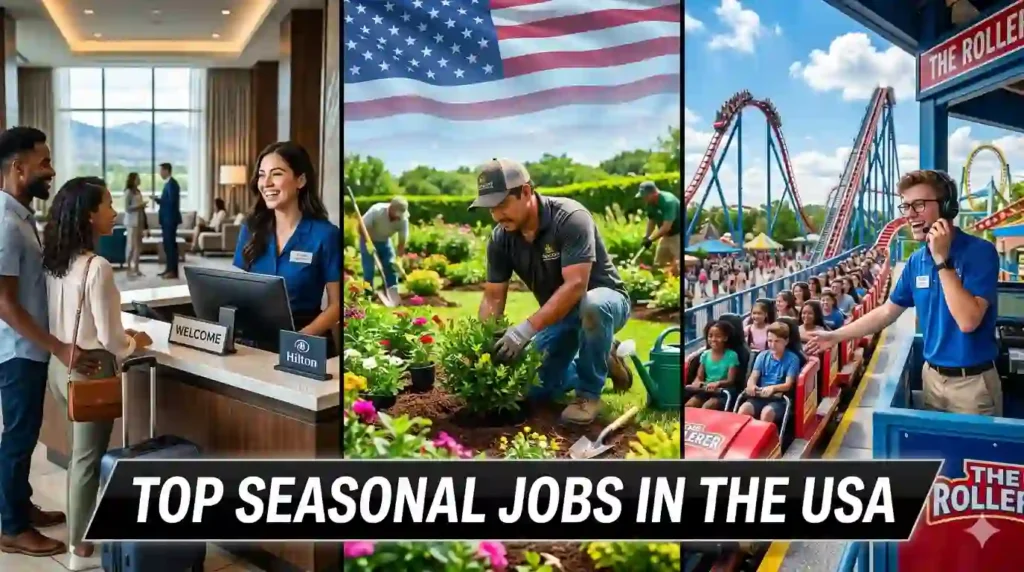
Landscaping is the second largest H2B sector by volume. Lawn care and landscaping companies across the US hire heavily through H2B, particularly for the spring and summer seasons. These roles typically require physical fitness and some experience with outdoor work rather than any formal qualification.
Construction and infrastructure companies use H2B for peak-season labour needs, particularly in states with strong summer construction windows. Roles range from general labour to skilled trades assistance.
Seafood processing is a significant H2B sector in Alaska and the Pacific Northwest. Plants processing salmon, crab, and other seasonal catches hire large numbers of H2B workers for three to five month seasons. The work is demanding but the wages are strong and accommodation is typically provided.
Amusement parks and entertainment venues — including Disney World, Universal Studios, and various regional theme parks — run established international seasonal worker programmes that use the H2B framework. These roles include ride operators, retail staff, food service workers, and event support positions.
CoolWorks lists seasonal job opportunities specifically for international applicants across many of these employers: https://www.coolworks.com/
H2B Visa for UK, Canadian and European Workers — What to Know
If you are based in the UK, Canada, or Europe, the H2B visa process works the same way as for any other eligible nationality — but there are a few practical points worth knowing that are specific to applicants from these regions.
UK nationals currently hold strong approval rates at US visa interviews, partly because of the long-standing relationship between the two countries and partly because UK applicants tend to have straightforward ties-to-home-country documentation. If you own property in the UK, have family here, or are employed outside the US season, make sure those documents are in order before your interview.
Canadian nationals have an additional option worth considering. Canada shares a land border with the United States, and for seasonal roles that begin close to that border, some Canadian H2B workers travel directly overland rather than flying. This does not change the visa process, but it can simplify logistics for the right role.
European applicants from EU member states benefit from relatively straightforward passport documentation. The DS-160 process and consular interview requirements are the same, but processing times at US consulates in major European cities — London, Amsterdam, Berlin, Paris — are generally shorter than at consulates in other regions.
For all applicants from these regions, the H2B annual cap is the most significant practical constraint. The US government sets a cap of 66,000 H2B visas per fiscal year — split between the first and second halves of the year. In recent years, this cap has filled quickly, sometimes within weeks of opening. Applying early, working with an experienced employer who files promptly, and targeting the second-half cap if the first fills before you are ready are all strategies worth discussing with your sponsoring employer.
The US Department of State’s page on H2B visa specifics for your country is accessible through the embassy locator: https://www.usembassy.gov/
How Long Does the H2B Visa Take in 2026
The honest answer is that timing depends more on your employer’s filing speed than on government processing times alone.
The Department of Labor Temporary Labor Certification process currently takes between 30 and 60 days. USCIS I-129 petition processing under standard service takes between 3 and 5 months. Premium processing delivers a decision within 15 business days but does not speed up the DOL stage that must happen first.
Consular interview appointments at major US embassies in the UK and Europe are currently scheduling within 2 to 4 weeks for H2B applicants. Once the interview is passed, visa issuance typically takes 3 to 5 business days.
Working backwards from a target start date, most experienced H2B employers begin their DOL process at least 6 months before the season starts. If you are targeting a summer 2026 season and have not found an employer yet, summer is tight — but the winter 2026/27 season is very much within reach if you start now.
The full H2B processing timeline guidance is on the USCIS website: https://www.uscis.gov/working-in-the-united-states/temporary-workers/h-2b-temporary-non-agricultural-workers
H2B vs H1B vs EB3 — Which Route Is Right for You
If you are weighing your US work options, understanding how the H2B compares to the other main pathways saves you time.
H1B
The H1B is for specialty occupations that require at least a bachelor’s degree — software engineers, accountants, architects, and similar professional roles. It is subject to an annual lottery, extremely competitive, and not relevant if you do not have a degree in a qualifying field. The H2B has no lottery and no degree requirement.
EB3
The EB3 is an employment-based immigrant visa — meaning it leads to a US green card rather than a temporary work period. The unskilled worker category of EB3 does not require a degree, but processing times are measured in years rather than months, and you need an employer willing to go through a significantly more complex process. The H2B is the right choice if you want to work in the US in the near term without committing to a permanent immigration process.
H2A
The H2A is the H2B equivalent for agricultural work — crop harvesting, farm labour, and related seasonal roles. If your background is in agriculture rather than hospitality or construction, the H2A may be a better fit. The process is similar but the eligible occupations and employer base are entirely different.
For most workers from the UK, Canada, and Europe who want to spend a season working legally in the United States without a degree and without a multi-year wait, the H2B is the most practical and accessible route available in 2026.
Frequently Asked Questions
Can I really get an H2B visa if I have zero college education?
Yes, absolutely. The H2B visa framework is strictly based on the employer’s operational needs rather than the applicant’s academic credentials. The US government evaluates whether the job itself is temporary and non-agricultural, not whether you hold a university degree. As long as you possess a valid job offer from a certified US sponsor and can fulfill the basic physical or communication requirements of that specific seasonal role, your formal education level will not impact your approval.
How do I find US employers offering H2B sponsorship in 2026?
The most reliable method is using the US Department of Labor’s iCERT portal (SeasonalJobs.dol.gov), where you can view verified job orders from employers who have already cleared the initial domestic recruitment phase. Additionally, specialized seasonal career boards like CoolWorks.com and H2BVisa.com feature active listings for international applicants. Major hospitality groups, national parks, and ski resorts also manage direct international hiring pipelines on their official corporate career pages.
What is the total cost of getting an H2B visa, and who pays it?
By law, the US employer is legally required to handle the heavy financial lifting. They must cover the Department of Labor certification, the baseline USCIS Form I-129 filing fees, and any optional premium processing fees (which adjusted to $1,780 for H2B petitions). As the worker, your direct expenses are typically limited to the DS-160 visa application fee (currently $185) and your travel logistics, though many established seasonal employers choose to reimburse travel costs upon arrival.
What are the 2026 H2B visa cap limits, and what happens if they fill up?
The standard annual statutory cap is set at 66,000 visas, split equally into two halves (33,000 for winter and 33,000 for summer). Because these regular slots exhaust incredibly fast, the US government released up to 64,716 supplemental H2B visas for Fiscal Year 2026 to assist businesses facing labor shortfalls. While the initial supplemental pools favor returning workers, the final late-season allocation provides a critical opening for first-time applicants without prior H2B history.
Why do H2B visa applications fail at the interview stage, and how can I avoid it?
The single most common reason for denial is failing to satisfy Section 214(b) of the Immigration and Nationality Act, which requires proving non-immigrant intent. Consular officers often deny visas if they suspect an applicant intends to stay permanently. To prevent this, you must show compelling, concrete ties to your home country. Bring physical documentation to your interview, such as property rental agreements, evidence of family dependencies, active bank accounts, or proof of an ongoing job/education program awaiting your return.