
If you’ve ever typed “average salary in UK 2026” into Google just to see how your paycheck compares to everyone else, the answer now has a clear number attached to it. According to the Office for National Statistics Annual Survey of Hours and Earnings, the median full-time salary in the UK is currently £39,039 a year. That figure matters more than any other because it represents the true middle point of UK pay, not a number inflated by a small group of extremely high earners.
This guide breaks down the average salary in UK 2026 by region, sector, age, and experience level, and also shows what that number actually looks like once tax and National Insurance are removed. Whether you’re negotiating a job offer, planning a move within the UK, or comparing pay before relocating from abroad, this is the most complete and current picture available right now.
If you’re researching this as part of a move to the UK, it’s worth reading alongside our guide to the UK Skilled Worker Visa 2026, since visa salary thresholds are set using the same ONS data referenced throughout this article.
Table of Contents
What Is the Average Salary in UK 2026?
The average salary in UK 2026 depends entirely on which measure is being used, and that distinction changes the answer more than most people realize.
The median full-time salary in UK 2026 is £39,039 per year. This is the middle value when every full-time worker in the country is lined up from lowest to highest paid. Half of all full-time employees earn more than this, and half earn less. Because it isn’t distorted by a handful of very high earners at the top, the median is the figure most economists and recruiters trust when describing a typical UK salary.
The mean salary, often called the average in everyday conversation, sits higher at roughly £44,000 to £48,500. This number gets pulled upward by the smaller group of workers in finance, law, and senior executive roles who earn substantially more than everyone else. If your salary sits below the mean, it doesn’t necessarily mean you’re underpaid. It often just means the mean is being skewed by outliers at the very top.
For the entire workforce, not just full-time staff, the average salary in UK 2026 looks different again. The median across all employees, including part-time workers, comes in at around £32,890. Part-time workers alone earn a median of roughly £14,713 a year, which reflects fewer hours rather than a lower hourly rate.
If someone quotes you the average salary in UK 2026 without specifying which measure they mean, it’s worth asking. The gap between £32,890 and £48,500 is wide enough to completely change how you interpret your own position.
Average Salary in UK 2026 by Region
Where you work has a bigger impact on pay than almost any other factor besides your profession. London sits well above every other region, with median full-time pay reaching £39,778, and some calculations placing the London premium as high as 25 to 35 percent above the national figure once finance and tech concentration is factored in.
At the other end, the North East of England consistently reports the lowest regional median, typically between £29,500 and £31,200. That creates a gap of close to £10,000 a year between the highest and lowest paying regions of the same country.
| Region | Approx. Median Full-Time Salary |
|---|---|
| London | £39,778 |
| South East England | £37,500 |
| Scotland | £36,800 |
| East of England | £36,200 |
| North West England | £33,900 |
| Wales | £32,600 |
| North East England | £31,200 |
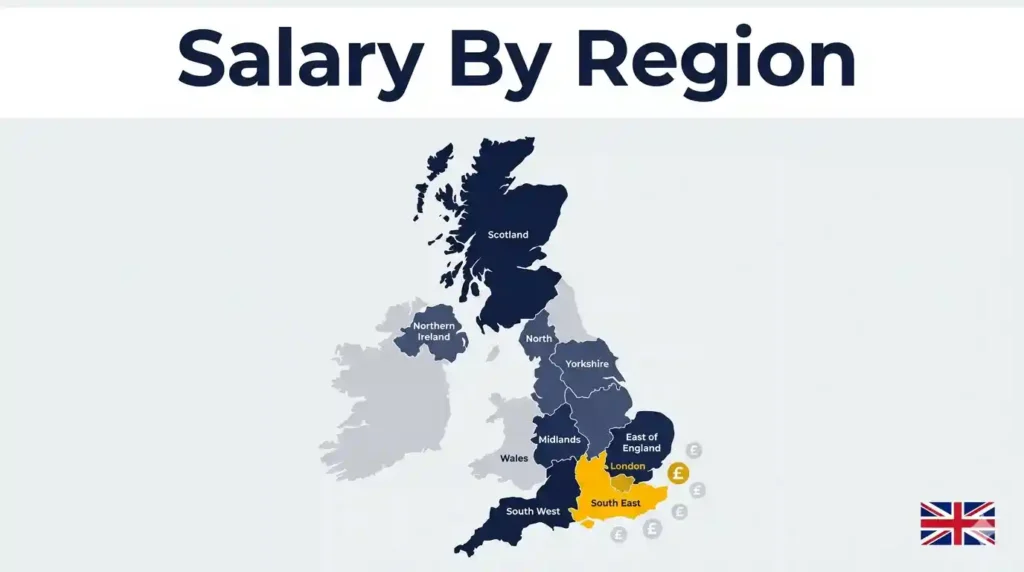
The South East, Scotland, and parts of the East of England report above-average earnings, largely thanks to commuter towns feeding London’s job market and Scotland’s strong energy and financial services sectors. Manchester and Bristol have also emerged as strong regional hubs, driven by growing tech and media employment, while Birmingham and Glasgow offer solid but comparatively lower salaries in line with their regional industry mix.
One important caveat worth remembering: a higher salary in London doesn’t automatically mean a stronger financial position. Once rent, which averages £1,800 to £2,200 a month for a one-bedroom flat in inner London zones, and commuting costs of £2,000 to £3,000 a year are factored in, the real-terms advantage of a London salary often shrinks considerably. Several analyses now suggest workers in Manchester or Liverpool end up with more disposable income after rent than Londoners earning £10,000 more on paper.
Average Salary in UK 2026 by Sector and Industry
Sector choice may be the single biggest lever over your lifetime earnings. The gap between the highest and lowest paying industries in the UK now exceeds £25,000 a year, which is one of the clearest patterns in the average salary in UK 2026 data.
Finance, IT, and professional services sit at the top, with median salaries running 30 to 60 percent above the overall workforce average. Within tech specifically, software engineers typically start in the £40,000 to £55,000 range at junior level, climbing to £65,000 to £90,000 mid-career and £90,000 to £130,000 at senior level, with London-based roles adding another 30 to 60 percent on top.
Legal careers show one of the widest internal spreads of any profession. A newly qualified solicitor at a top London firm can expect £120,000 to £150,000, while the same qualification at a regional firm outside London might pay closer to £40,000 to £55,000.
At the lower end, hospitality and retail remain the lowest-paid major sectors, with substantial overlap with the National Living Wage floor. Care work follows a similar pattern, often sitting at or barely above the statutory minimum despite the demanding nature of the work. If you’re exploring alternative routes into better-paying roles without a university qualification, our guide on the highest paying UK jobs without a degree covers several sectors that beat the national average without requiring a formal degree.
The public sector tells a more nuanced story. Civil service, local government, and Ministry of Defence roles often pay less competitively than private sector equivalents at senior level, but tend to offer more stability, which partly explains why public sector earnings growth has recently outpaced private sector growth.
Average Salary in UK 2026 by Age and Experience
Earnings in the UK follow a fairly predictable arc tied to age, though the curve flattens earlier than many expect. Workers in their early twenties typically earn around £27,000. By their forties, that climbs to roughly £41,000, with earnings peaking in the 40 to 49 age bracket at approximately £37,734, the highest of any age group measured. After 50, salaries level off and in some cases decline slightly, a pattern that has held consistently in UK labour data for years.
Experience matters just as much within individual professions as it does across the workforce. In skilled roles like software engineering, law, and finance, the gap between entry-level and senior pay for the same job title routinely exceeds 100 percent. A junior data analyst might start at £35,000, while a senior data scientist in the same field can reach £85,000 to £120,000.
Does a Degree Still Affect the Average Salary in UK 2026?
Yes, though the gap has narrowed slightly as some skilled trade and technical routes have closed ground on traditional graduate careers. UK graduates earn a median of around £48,000 by age 40, compared to £35,000 for non-graduates at the same career stage. That £13,000 gap compounds significantly over a working lifetime, even after factoring in the cost of higher education and student loan repayments.
Several skilled trades and technical apprenticeship routes now offer starting salaries that rival or exceed graduate entry-level pay, particularly in engineering, construction management, and technical sales. The traditional assumption that a degree guarantees higher lifetime earnings still holds on average, but it’s no longer the only reliable path to a strong salary in the UK.
What Does the Average Salary in UK 2026 Look Like After Tax?
A gross salary figure only tells part of the story. What actually lands in your bank account each month depends on Income Tax, National Insurance, and any pension contributions.
On the UK median full-time salary of £39,039, take-home pay under 2026/27 PAYE rates for England, Wales, and Northern Ireland comes to approximately £2,636 a month, or just under £31,650 a year, before pension or student loan deductions. That works out to roughly £6,300 to £7,400 going to tax and National Insurance combined, depending on individual circumstances.
The current personal allowance sits at £12,570, meaning the first £12,570 of anyone’s salary is tax-free. Beyond that, the basic rate of 20 percent applies up to £50,270, with the higher rate of 40 percent kicking in above that threshold. National Insurance adds 8 percent on earnings between £12,570 and £50,270, dropping to 2 percent above that level.
One quirk worth knowing: earning between £100,000 and £125,140 triggers a personal allowance taper that effectively creates a 60 percent marginal tax rate across that band. Someone earning exactly £125,140 ends up paying a similar effective rate to someone earning £150,000 or more, making that specific salary range one of the least efficient under current tax rules.
Minimum Wage and the Lower End of the Average Salary in UK 2026
At the bottom of the UK pay structure, the National Living Wage for workers aged 21 and over rose to £12.21 per hour from April 2025, with further increases scheduled through 2026 as the government works toward its long-term target of two-thirds of median earnings. For a full-time worker on minimum wage, that translates to roughly £23,800 a year before tax, assuming a standard 37.5-hour week.
Younger workers fall under different bands. The rate for 18 to 20 year olds sits at £10.00 an hour, while 16 to 17 year olds and first-year apprentices earn £7.55 an hour. These age-based tiers remain one of the more commonly misunderstood parts of UK employment law, particularly among employers hiring younger staff for the first time.
The Gender Pay Gap and the Average Salary in UK 2026
The UK’s median gender pay gap for full-time employees stands at approximately 7.5 percent in 2026, meaning women in full-time roles earn 7.5 percent less per hour than men on average. When part-time workers are included alongside full-time staff, that gap widens to around 13 to 14 percent.
The gap has narrowed considerably since 1997, when it stood at 27 percent, but progress has slowed noticeably since around 2018. The gap is nearly closed for workers aged 22 to 29, suggesting pay equity has improved meaningfully for younger generations, even as it remains wide in professional services and financial sectors where senior roles still skew heavily male.
So, What Counts as a Good Average Salary in UK 2026?
There’s no single number that defines a good salary, because so much depends on where you live and what stage of life you’re in. Anything above £39,039 puts you above the national full-time median, a reasonable benchmark for most people outside London. In London specifically, a comfortable baseline for a single person is closer to £50,000 to £55,000 gross, largely driven by rent rather than lifestyle inflation elsewhere.
For anyone evaluating a job offer, particularly if you’re moving from abroad, the more useful exercise is comparing the offer against regional and sector data rather than the national headline figure alone. A £45,000 salary in Manchester goes considerably further than the same number in central London, while that same £45,000 in finance might sit below sector average, yet comfortably above average in hospitality or retail.
If you’re weighing the UK against other destinations before making a decision, it’s worth comparing this data against our breakdown of the average salary in Canada 2026 or the average salary in USA 2026, since cost of living and tax structures differ enough to change the real-world comparison significantly.
The most reliable approach is simple: check the median for your specific region, your specific sector, and your specific age bracket, then compare your own number against that combination rather than the national average alone. That comparison will tell you far more about where you actually stand than any single national figure ever could.
If you’re applying for roles in the UK and want your application to actually reach a hiring manager, it’s worth pairing this salary research with an ATS-optimized CV. Our free ATS resume builder is built specifically for the UK, USA, Canada, and Europe job markets and takes a few minutes to use.
What is the average salary in UK 2026?
The average salary in UK 2026 depends on which measure is used. The median full-time salary is £39,039 per year according to ONS ASHE data, while the mean (average) salary is higher at roughly £44,000 to £48,500, pulled up by a smaller group of very high earners.
Is £40,000 a good salary in the UK in 2026?
Yes, £40,000 is slightly above the UK full-time median salary of £39,039, making it above average for a full-time employee. It is a strong salary for someone in their twenties or early career, though the answer depends on your region, since £40,000 stretches much further outside London than inside it.
What is the average salary in the UK after tax in 2026?
On the UK median full-time salary of £39,039, take-home pay under 2026/27 PAYE rates comes to approximately £2,636 a month, or just under £31,650 a year, before pension or student loan deductions. This accounts for Income Tax and National Insurance contributions.
Which UK region has the highest average salary?
London has the highest average salary in the UK, with a median full-time salary of £39,778. The South East, Scotland, and parts of the East of England also report above-average earnings, while the North East of England has the lowest regional median at around £29,500 to £31,200.
Does the average salary in UK 2026 differ by age?
Yes. Workers in their early twenties typically earn around £27,000, rising to roughly £41,000 by their forties. Earnings peak in the 40 to 49 age bracket at approximately £37,734, then level off or slightly decline after age 50.